


Situations We Help With in Slough (SL) – Boarding Up After Damage, Break-ins & Emergencies
When something happens to your property—a break-in, smashed glazing, storm damage, a small fire, even an accidental impact—the priority is simple: make it safe and secure again. Our team provides boarding up in Slough and across the SL postcode area, helping homeowners, landlords, shop managers and facilities teams protect buildings until repairs can be completed.
This page is here to guide you through the most common situations we attend, what to do first, and what securing the property typically involves. If you need urgent help, you can also go straight to our emergency boarding up page.
First: what to do right now (before we arrive)
It’s normal to feel stressed—especially if it’s your home or you’re responsible for a business premises. These steps help keep everyone safe and make the next part (insurers, repairs, security) easier.
- Make sure everyone is safe. If there’s ongoing danger (fire, suspected intruder, exposed electrics), call 999.
- If it’s a crime, call the police and get a reference number. This is often needed for insurance.
- Take a few photos if it’s safe to do so. Wide shots plus close-ups of the damage can be useful later.
- Don’t clear up glass in a hurry. If it’s a shopfront or there’s a lot of glazing, keep people away and wait for proper PPE.
- Call us with the basics: location (postcode), what’s damaged (window/door/roof/shopfront), and whether the property will be left unattended.
If you’re unsure whether boarding up is the right solution for your situation, our explainer on what boarding up is and when it’s used can help.
The situations we attend most often in Slough & the SL area
Slough’s a busy place: dense housing around SL1 and SL2, mixed-use streets near the town centre, and a lot of commercial property along key routes like the A4 Bath Road and around trading estates. That mix means we’re called out to a wide range of incidents—from accidental breakages in flats to vandalism at retail units and forced entry to vacant buildings.
Below are the most common “this just happened—what now?” scenarios.
Burglary / attempted break-in
Forced entry often leaves a property exposed—especially if the lock area has been split, the door is hanging, or a small window has been used as access. Even when the intruder didn’t get inside, attempted break-ins can leave frames compromised.
We can help you secure the property after burglary by boarding vulnerable windows, stabilising openings, and (where appropriate) fitting stronger temporary options.
- See the dedicated guide: boarding up after burglary in Slough
- Relevant services: door boarding in Slough and window boarding in Slough
What we’ll usually check on burglary jobs
- Whether the frame is still sound enough for non-destructive fixing methods
- If there are multiple access points (rear doors, side windows, garage entries)
- If the property is likely to be unoccupied overnight, which affects the best securing option
If the frame is too damaged for a clean, non-destructive fix, we’ll explain what’s possible before proceeding—security comes first, but we won’t create unnecessary damage.
Vandalism & malicious damage
Vandalism jobs in Slough often involve smashed panes, damaged shopfront glazing, or repeated targeting where the building is empty or looks vulnerable. The risk is not just weather ingress—it’s that once a property is easy to access, it can be hit again.
- See the dedicated guide: boarding up after vandalism in Slough
- For retail and commercial fronts: shopfront boarding in Slough
Depending on the opening size and location, we may use 18mm exterior-grade plywood for strength and durability, or OSB for smaller/less exposed areas where appropriate. Anti-tamper fixings are particularly important where boards could be removed from the outside.
Storm damage (wind, debris impact, lost tiles)
High winds and flying debris can crack glazing, blow in old frames, or tear off parts of a roofline. In and around the Thames Valley, weather can change quickly, and the immediate goal is usually weatherproofing and preventing further water ingress.
- See the dedicated guide: storm damage boarding in Slough
- If the damage is overhead: roof boarding in Slough
On storm jobs we’re often dealing with awkward access—rear extensions, conservatory-style roofs, or upper floors where safe ladder positioning matters. We’ll talk through access options on the phone so you know what to expect.
Fire damage (post-incident security)
After a fire, even a small one, buildings can be left exposed: doors removed by the fire service, windows broken for ventilation, locks damaged, or frames warped by heat. Our role is to secure the property after fire damage, not to carry out smoke/odour remediation or building reinstatement.
- See the dedicated guide: boarding up after fire damage in Slough
We’ll also advise if ventilation is needed (for example, to reduce moisture build-up) while still keeping the site secure.
Flood damage & water ingress
Flooding can swell timber frames, weaken fixings, and make doors hard to close or lock properly. In some cases, the safest immediate action is boarding up a damaged opening while you arrange drying and repairs.
- See the dedicated guide: boarding up after flood damage in Slough
We’ll always be honest if boarding isn’t the best immediate choice—for example, where drying and airflow are essential. In those cases, we’ll explain security-focused options that still allow for safe ventilation.
Accident/impact damage (vehicles, deliveries, building works)
Accidental impact damage is common around busy access areas—delivery bays, car parks, and tight residential streets. A car reversing into a low wall, a dropped scaffold board, or a cracked shopfront panel can quickly turn into an urgent security issue.
- See the dedicated guide: boarding up after accident damage in Slough
If there’s any concern that the opening is part of a structural issue (for example, significant movement around a frame), we’ll secure what we safely can and advise you to involve a builder/structural professional for the underlying repair.
How we secure properties in these situations (what boarding up actually involves)
Boarding up isn’t “one-size-fits-all”. The right method depends on the type of opening, the condition of the frame, and how long the building needs to remain secure.
Windows: from small panes to large openings
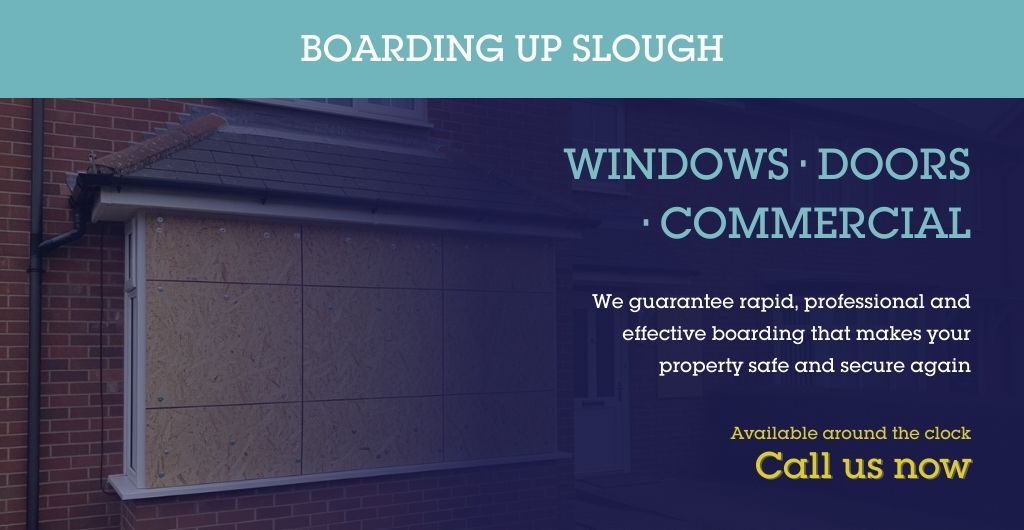
For broken or vulnerable windows we typically use properly measured boards cut to suit the opening, fixed to resist removal from the outside.
- Learn more: window boarding in Slough
Doors & forced entry points
If a door has been kicked in or the lock area is destroyed, simple boarding may not be enough—especially if people need access for repairs, insurers, or site checks.
- Learn more: door boarding in Slough
For some properties, a temporary steel door can be a better medium-term solution than repeated timber boarding—particularly for vacant buildings or where access is needed while keeping security high.
Shopfronts & commercial glazing
Retail and commercial sites have different pressures: you may need to protect stock, prevent unauthorised entry, and keep the frontage safe for pedestrians.
- Learn more: shopfront boarding in Slough
We can also work with site contacts, facilities teams, or managing agents when you’re coordinating multiple contractors.
Roofs, skylights & overhead openings
Overhead openings need a careful approach: safety, weatherproofing, and minimising further damage are key.
- Learn more: roof boarding in Slough
What you get from us (useful for landlords, insurers & facilities teams)
We’re not loss adjusters and we can’t promise what an insurer will or won’t cover—but we can provide the practical documentation insurers typically ask for.
You can usually expect:
- A clear description of the works completed (what was secured and how)
- Time-stamped photos before/after, where possible and safe
- An itemised invoice suitable for insurance submission
- Notes on any access constraints or frame condition that affected the method used
For more guidance, see: insurance claims help for boarding up in Slough.
Common questions (and honest answers)
Is boarding up covered by insurance in Slough?
Often it can be, especially after burglary, vandalism, storm damage or fire—but policies vary. Keep your crime reference number (if applicable), take photos, and contact your insurer early. We can provide invoices and work details—see insurance claims help for boarding up in Slough.
How long does boarding up take?
It depends on how many openings are affected and whether access is straightforward (ground floor) or complex (upper floors, shopfront spans, rooflights). When you call, we’ll ask a few practical questions so we can advise on the likely scope and approach. You can also review general guidance on FAQs.
Can you secure a property that’s going to be vacant for a while?
Yes. Vacant buildings often need stronger, longer-term protection than a basic timber board—particularly if the site is likely to be targeted. Our vacant property boarding in Slough page covers options and considerations.
Do you handle both homes and business premises?
Yes. We regularly secure flats, houses, and HMOs as well as offices, retail units, warehouses and managed buildings. See residential boarding up in Slough and commercial boarding up in Slough.
I’m not sure which service I need—what should I ask for?
Tell us what happened (break-in, storm, accident) and what’s damaged (window/door/roof/shopfront). We’ll recommend the right next step, whether that’s emergency boarding up or a planned visit, and we’ll explain the method before any work starts.
When you call: the information that helps us help you faster
If you can, have this ready:
- Postcode and the best access point (front/rear/side)
- What’s damaged and roughly how big the opening is
- Whether the property is occupied or will be left empty
- Any immediate hazards (loose glass, exposed wires, unsafe frames)
- Police incident number (if a crime)
If you want to understand how our services differ, browse boarding up services in Slough or start with what boarding up is and when it’s used.
Helpful Links
- emergency boarding up
- window boarding in Slough
- door boarding in Slough
- shopfront boarding in Slough
- insurance claims help for boarding up in Slough
- FAQs
Ready to get started? Call 01753 379 919 or email us for a free, no-obligation quote.
