


Temporary Fencing in Slough (SL) – Secure Your Site Fast
When a boundary is suddenly open—after a break-in, a vehicle impact, storm damage, or an urgent void-property handover—you don’t just need a “repair”, you need the site made safe. Our temporary fencing in Slough service is designed for fast, practical perimeter security across the SL postcode area, helping you control access while longer-term works are arranged.
If you’re dealing with an active incident or you need urgent help outside normal hours, use our emergency service: emergency boarding up is the quickest route to getting the property secured.
Need to secure a site now? Call 01753 379 919 or email us.
When temporary fencing is the right call (common emergency scenarios)
Temporary fencing is often the most sensible first step when the building may be intact but the perimeter is compromised—or when there’s a safety risk around a damaged area. In Slough, we’re frequently asked to help after:
- Vehicle impacts into boundary walls or railings (common near busy routes like the A4 Bath Road and roundabouts feeding the M4 J6)
- Storm damage bringing down panels, gates, or hoarding (see storm damage securing for what to do next)
- Break-ins where a rear boundary has been forced, leaving an easy route back in (often paired with door boarding in Slough or window boarding in Slough)
- Fire or flood incidents, where parts of a site must be cordoned off for safety while you coordinate insurers and contractors (fire damage, flood damage)
- Void or vacant properties between tenants—especially where gardens back onto footpaths, alleyways or open land (vacant property security)
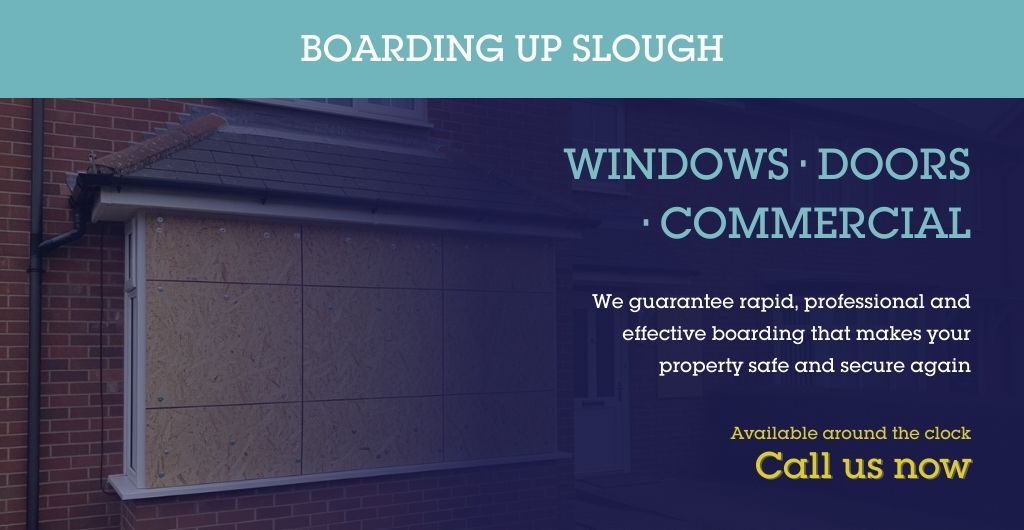
If the immediate risk is an exposed door, smashed glazing, or a compromised shopfront, we may recommend boarding or a steel door instead of (or as well as) fencing. You can compare options on what boarding up is or browse boarding up services in Slough.
What temporary fencing achieves (and what it doesn’t)
Temporary fencing is about controlling access and creating a clear boundary quickly.
It’s ideal for:
- Preventing opportunist entry while repairs are arranged
- Creating a safe exclusion zone around hazards (broken glass, unstable masonry, fire-damaged areas)
- Keeping the public away from a worksite and helping you meet basic duty-of-care expectations
It’s not a magic shield:
- If someone is determined and has time, most temporary fencing can be defeated
- If the ground conditions are very uneven or waterlogged, install methods may need adapting
- It doesn’t replace the need to secure the building envelope (doors, windows, roofs)
Where needed, we’ll talk you through a layered approach: perimeter fencing + door boarding in Slough + window boarding in Slough, depending on the risks and how long the property will be unattended.
Our temporary fencing options (materials and methods)
We keep the approach practical. The right fencing depends on access, ground type, and the risk level.
Freestanding temporary fencing panels (most common)
For many call-outs, we use galvanised steel mesh panels supported by rubber or concrete feet.
Typical uses:
- Securing open boundaries around car parks, gardens, or loading areas
- Creating a “hard line” where a wall or gate has failed
- Short-term site security while builders or insurers arrange works
How we improve security:
- We align panels to minimise gaps and “pinch points”
- We add stabilisers where wind exposure is a concern
- We use anti-tamper couplers/clips where appropriate (especially for unattended sites)
Temporary gates / access control points
If you still need trades, residents, or staff to enter safely, we can create a controlled access point rather than leaving panels to be shifted.
What this helps with:
- Preventing everyone using the same “gap in the fence”
- Maintaining access for remedial works, clearance, or glazing contractors
- Reducing liability risk around an active site
Internal cordons and exclusion zones
Not all fencing is perimeter fencing. Sometimes the building is secure, but an area is unsafe.
We can fence off:
- A collapsed section of boundary
- A fire-damaged corner of a site
- A fragile roof edge or an area beneath damaged guttering (if you also need overhead protection, see roof boarding in Slough)
How we install temporary fencing (what happens on the day)
Every job is slightly different, but here’s the typical process:
-
Rapid assessment on arrival
We check where the risk actually is—public access routes, footpaths, rear alleys, and any obvious hazards like glass, protruding fixings, or unstable posts. -
Agree the line and access points
We’ll confirm what you need: full perimeter closure, partial closure, or a cordon around one area. -
Install panels and stabilise
We set panels with suitable feet, couplers, and stabilisers depending on exposure. Where the ground is awkward (uneven paving, gravel, soft verge), we adapt the line to keep it stable and secure. -
Check gaps, corners, and “lift points”
Most fence failures come from corners and low points. We pay attention to where panels could be lifted, shifted, or bypassed. -
Documentation for your records
If you need it for a landlord file, facilities log, or insurer pack, we can provide a clear work statement, itemised invoice, and time-stamped photos.
If the boundary is too damaged for a clean solution (for example, a wall has fallen and the debris line makes fencing unsafe), we’ll explain the limitations and the options before proceeding.
Temporary fencing for different property types in Slough
Slough’s mix of residential estates, trading areas and industrial parks means fencing jobs vary a lot—sometimes it’s a tidy rear garden boundary, other times it’s a large, open commercial frontage.
Residential homes and blocks
For homes—especially end-terraces, maisonettes, and blocks with shared access—temporary fencing is often used to secure:
- Rear access routes after a break-in
- Unsafe garden boundaries where panels have collapsed
- Exclusion zones while glazing or boarding work is completed
Related: residential boarding up and burglary repairs and securing.
Commercial and retail premises
For shops, offices and trade counters, fencing can help when:
- A vehicle strike opens up the forecourt boundary
- A shopfront incident creates a public safety risk (we may also recommend shopfront boarding in Slough)
- You need to separate public areas from works areas out of hours
Related: commercial boarding up.
Vacant and void properties
If a property is empty—between tenants, probate, or refurbishment—perimeter control becomes even more important, particularly where there’s rear access or low visibility.
Related: vacant property boarding and security.
A realistic example: urgent boundary security after impact damage in SL1
A facilities manager called after a vehicle clipped and broke a low boundary section, leaving a wide opening onto a parking area. The building itself was fine, but the site was effectively open to anyone walking past.
We attended, agreed a secure fence line that maintained safe pedestrian movement, installed freestanding mesh panels with stabilisers, and created a controlled access point for morning deliveries. The customer received time-stamped photos and an itemised invoice to support their incident report and insurer notification.
FAQs about temporary fencing in Slough
How quickly can you put up temporary fencing?
We prioritise urgent calls, especially where there’s public access risk or the site can’t be left open. We don’t promise fixed arrival times because traffic and access vary across SL postcodes, but if it’s urgent, call and we’ll tell you the most realistic next steps. For out-of-hours help, use emergency boarding up.
Can temporary fencing be used alongside boarding up?
Yes—very often. Temporary fencing secures the boundary, while boarding secures the building envelope. If windows or doors are compromised, we may recommend window boarding in Slough or door boarding in Slough at the same visit where practical.
Is temporary fencing suitable for uneven ground or grass verges?
Usually, yes, but it depends on how uneven and how exposed the area is to wind. We’ll adjust the layout and stabilisation to suit the ground. If the line can’t be made safe and secure, we’ll explain why before installing.
Do you provide documentation for insurers or managing agents?
We’re not loss adjusters, but we can provide the documentation insurers and property managers typically ask for: photos, a work summary, and an itemised invoice. For guidance, see insurance claims support.
Do you cover my SL postcode?
Yes—our service covers Slough and the surrounding SL area. If you’re unsure, check areas we cover or contact us with your postcode and site details.
What to do before we arrive (practical steps)
If it’s safe to do so:
- Keep people away from the hazard area, especially children and passers-by
- Take a few photos for your records (before anything is moved)
- If there’s been a crime, get a police reference number
- If it’s a commercial site, let us know about access restrictions, shutters, gates, or security staff
If there’s immediate danger (exposed electricity, unstable structures), keep clear and call the relevant emergency services first—then call us to secure the site once it’s safe.
Clear next steps
Temporary fencing is about making a bad situation manageable: securing the boundary, reducing risk, and buying time for proper repairs.
Ready to get started? Call 01753 379 919 or email us for a free, no-obligation quote.
