


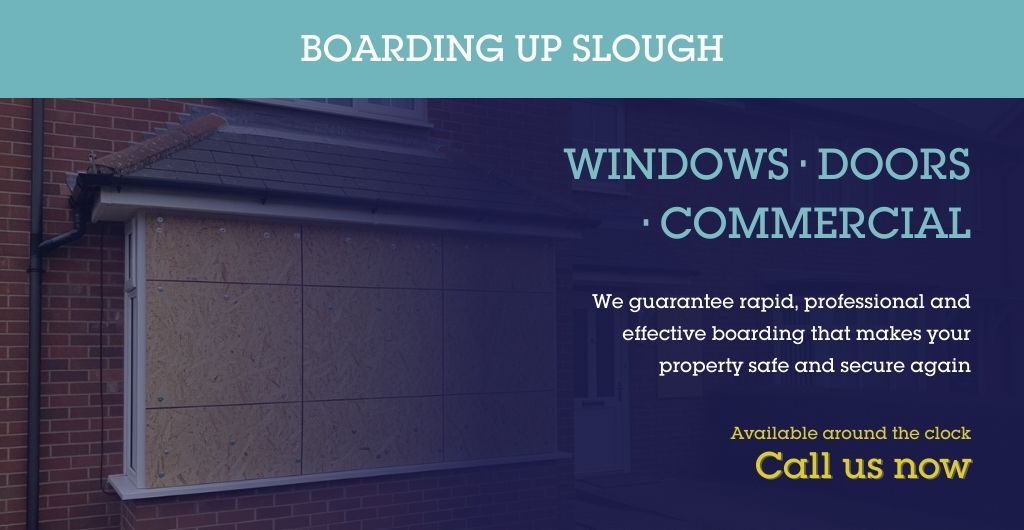
Residential boarding up in Slough (SL) – homes, flats and landlord properties
Residential damage is stressful. Whether it’s a smashed window on a ground-floor flat, a forced front door after a break-in, or storm damage that’s left a rooflight open to the weather, you usually need two things quickly: the home made safe and the property secured.
Boarding Up Slough provides residential boarding up across Slough and the wider SL postcode area (SL0–SL9) for homeowners, tenants, landlords and managing agents. We secure damaged windows, doors and other vulnerable openings so you can prevent further loss, reduce risk of re-entry, and keep the property weather-tight until repairs can be arranged.
For urgent help, call 01753 379 919 or email [email protected].
What “residential boarding up” covers (and what it doesn’t)
When people search for “boarding up Slough” for a home, they usually want a practical, short-term security solution after an incident. Our work is focused on securing openings and reducing immediate risk.
Residential boarding up can include:
- Boarding broken or vulnerable windows, including bay windows and side panels
- Securing damaged doors, including temporary security solutions where the door can’t be salvaged
- Boarding up patio doors, glazed panels, fanlights and small panes
- Making a property safe after a break-in, vandalism, accident or storm
- Helping landlords secure void properties between tenancies (where appropriate)
What we don’t do:
- We’re not glaziers or builders completing the permanent repair on the same visit (we can secure first, then you arrange the long-term fix).
- We’re not loss adjusters or legal advisers. We can provide documentation insurers typically request, but we can’t “approve” claims.
- Fire and flood clean-up/odour remediation is outside our scope—we secure the property so the next trades can work safely.
If you’re dealing with an urgent situation, see our emergency boarding up page.
Typical residential call-outs we see in Slough and the SL area
Residential properties across Slough and nearby towns are a real mix—Victorian and Edwardian terraces, 1930s semis, post-war estates, and modern apartments around transport hubs. That variety affects the way we secure a home.
Here are the most common scenarios we attend:
Break-ins and attempted break-ins
A common pattern is a forced door, smashed sidelights, or a rear window targeted for quick access. After the police have attended (if required), we’ll secure the opening to reduce the risk of re-entry and to make the property safe for occupants.
Related guidance: burglary repairs and boarding up
Vandalism and smashed windows
Stone impacts, damage to communal doors, or broken glazing on ground-floor flats can leave a property exposed. We’ll board the damaged area so you can arrange glazing replacement without leaving the opening unsecured.
Related guidance: vandalism repair and boarding
Storm damage and wind-blown debris
High winds can take out fence panels and dislodge roof tiles; branches can strike glazing; older frames can fail under pressure changes. We can board damaged windows and (where access is safe and suitable) secure rooflights/skylights to stop driving rain getting in.
Related guidance: storm damage boarding and roof boarding
Accidental impact (balls, DIY accidents, vehicle bumps)
We’re often called after an accidental break where a home needs securing the same day—especially if it’s a child’s bedroom window, a front elevation pane, or a patio door panel.
Related guidance: accident and impact damage
Fire or smoke damage leaving openings insecure
After a fire, doors and frames can be compromised and windows may be broken during firefighting. We can secure the property once it’s safe to do so, keeping access controlled while you organise the next steps.
Related guidance: fire damage securing
Flooding and water-damaged frames
Floodwater can swell timber frames and distort doors so they won’t close properly. Boarding up can be a temporary measure to secure vulnerable points while drying and remediation is arranged.
Related guidance: flood damage securing
How we board up residential windows and doors (our methods)
Every property is slightly different. A terraced house with sash windows needs a different approach to a modern flat with uPVC frames, and a communal entrance has different access requirements again. We’ll talk you through the safest, most secure option for your situation.
Window boarding: plywood vs OSB and when we use each
For most domestic jobs we use:
- 18mm exterior-grade plywood for strong, reliable security on larger openings or ground-floor vulnerabilities
- 12mm OSB (or similar) for smaller, less exposed openings where appropriate
We choose the board type and thickness based on opening size, vulnerability, and how long it’s likely to be in place. If a property will be empty, we’ll usually recommend the more robust option.
See: window boarding in Slough
Fixing methods and anti-tamper considerations
Security isn’t just “putting a board up”. The way it’s fixed matters.
Depending on the opening and frame condition, we may use:
- Reveals and baton methods (where suitable) to spread load and reduce further damage
- Through-fix techniques with internal support where access allows
- Anti-tamper fixings to help prevent removal from outside—especially important if the property is unattended overnight or between tenants
If the window or frame is too damaged for non-destructive methods, we’ll explain the options before proceeding. Sometimes the priority is stopping access and weather ingress, even if the surrounding material is already compromised.
Door security: boarding vs temporary steel doors
With residential doors, we normally aim to secure the existing door if it can be properly closed and locked. When it can’t (for example, the door has been forced, split, or the frame has moved), boarding can be a stop-gap.
For higher security—especially for vacant homes or where the entrance has been badly damaged—a temporary steel door may be the better choice because it provides controlled access for trades and insurers without leaving the property “sealed shut”.
See: door boarding and securing
Rooflights and vulnerable overhead openings
Roof damage is often more about weatherproofing and safe access than security alone. We’ll assess what’s possible from the ground and only proceed where access is safe. For rooflights and skylights, boarding can reduce rain ingress and deter opportunist entry (particularly where a flat roof is accessible).
What to expect when you call us out to a home
Residential jobs are often urgent, but they also need to be handled carefully—especially when people are shaken, tired, or trying to look after children or vulnerable relatives.
When you contact us, we’ll typically ask:
- What’s been damaged (window, door, shopfront-style glazing, rooflight)
- The rough size/number of openings and whether the property is occupied
- Whether the police/fire service have attended (if relevant)
- Any access details (shared entrance, rear access, keys with neighbour/agent)
- Whether there are immediate hazards (loose glass, unstable frame, alarms)
On arrival, our technicians will:
- Make the area safe as far as practicable (e.g., reducing immediate risk from broken glazing)
- Measure and cut boards to suit the opening
- Fix boards using an appropriate method for the frame type and condition
- Take time-stamped photos of the secured openings (useful for landlords and insurers)
- Provide itemised invoicing and a clear description of works carried out
If you need documentation for an insurer, our insurance claims guidance explains what is commonly requested and how we can help.
Homes, flats and landlord properties: common residential considerations
Occupied homes: security without making life impossible
If you’re living in the property, you may still need ventilation, light, or a safe route in and out. We’ll discuss the most practical approach so you’re secure without being unnecessarily “locked in”. Where the only door is compromised, we’ll prioritise a safe and secure means of entry/exit.
Flats and communal areas
Flats can involve:
- Shared entrances and controlled access
- Higher floors requiring different access planning
- Building managers, concierges, or resident associations needing updates
If you’re a leaseholder, tenant, or managing agent, we can coordinate access and provide photos for your records.
Landlords and voids: reducing risk between tenancies
Empty properties can attract attention—especially after an incident has made it obvious the home is unoccupied. We can help with short-term boarding, and for longer void periods we may recommend more robust security options depending on the risks and the condition of the openings.
If you’re securing an empty home, you may also want to read vacant property boarding.
Where we cover for residential boarding up (SL0–SL9)
We work across Slough and surrounding SL postcodes, including a wide spread of residential neighbourhoods and commuter towns. Common areas we cover include:
- boarding up in Slough (including SL1–SL3)
- boarding up in Langley and nearby residential estates
- boarding up in Cippenham
- boarding up in Burnham
- boarding up in Datchet
- boarding up in Windsor
- boarding up in Maidenhead
- boarding up in Gerrards Cross
- boarding up in Iver
For a full list, see areas we cover.
Practical tips while you’re waiting (especially after a break-in)
If you’re dealing with an incident right now, these steps can help—only do what’s safe:
- If there’s a crime, call the police and keep your crime reference number
- Take a few photos of the damage for your records (without touching glass or disturbed areas)
- Keep pets and children away from the damaged opening
- If it’s raining, place towels/containers to limit water ingress until the opening is secured
- Contact your insurer early; ask how they want emergency works documented
(We can provide photos and an invoice—see insurance claims support.)
If you need urgent help outside normal hours, use 24 hour emergency boarding up in Slough.
FAQs – residential boarding up in Slough
How long does boarding up take at a house?
It depends on the number and size of openings and how accessible they are. A single domestic window is usually quicker than multiple openings or a complex bay window. We’ll give you a realistic expectation over the phone once we know what’s been damaged.
Is residential boarding up covered by insurance in Slough?
Often it can be, particularly when it’s necessary to prevent further damage or secure the home after a break-in or storm. Policies vary, so it’s best to check with your insurer. We can provide the kind of documentation insurers commonly request—see insurance claims.
Can you secure a uPVC window or patio door?
Yes. uPVC frames are common in Slough and across the SL area. We’ll choose a fixing method that provides security while considering the condition of the frame and the safest way to secure the opening.
I’m a landlord—can you board up between tenants?
Yes. We regularly help landlords and agents secure voids, especially where there’s been damage or the property is visibly unoccupied. For longer periods, we can discuss options that suit access needs and risk level. See vacant property boarding.
Do you need me to be at the property?
Not always, but access needs to be arranged. For landlords/agents, we can work with keys held by an office, neighbour, or site contact, and we can send photos once the job is complete.
Related residential services
Depending on what’s happened, these pages may help you choose the right approach:
- window boarding in Slough
- door boarding and securing
- roof boarding services
- what boarding up is (and when it’s used)
- pricing and what affects cost
Helpful Links
- emergency boarding up
- window boarding in Slough
- door boarding and securing
- burglary repairs and boarding up
- areas we cover
- faqs
Ready to get started? Call 01753 379 919 or email us for a free, no-obligation quote.
