


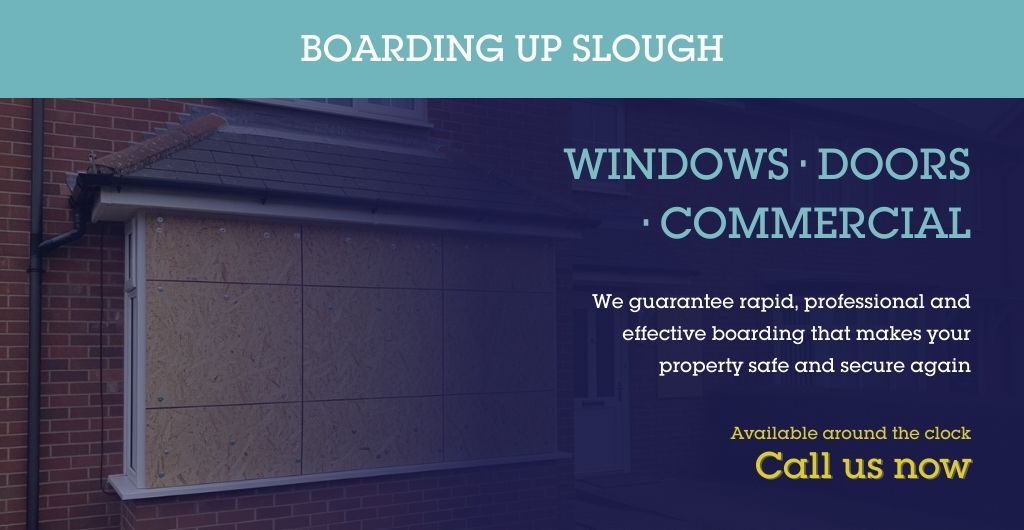
Commercial boarding up in Slough (SL) for shops, offices & industrial units
When something goes wrong at a commercial property, you don’t just have a broken window or a damaged door—you’ve got downtime, stock risk, staff safety concerns, and pressure from insurers, landlords, and facilities teams. Our commercial boarding up service in Slough is built for those realities, covering retail units, offices, warehouses, light industrial sites and public-facing premises across the SL postcodes.
If you need urgent help after a break-in, vandalism or impact damage, start with our emergency boarding up page and call 01753 379 919.
The types of commercial sites we secure (and what’s common locally)
Slough is a working town with a heavy commercial footprint—busy retail, distribution, business parks and mixed-use buildings. That means we’re regularly securing:
- High-street and parade retail units around Queensmere Observatory / the High Street corridor and local parades in areas like Cippenham and Langley
- Industrial and logistics buildings near major routes like the M4 (J6/J7) and A4 Bath Road, where shutters, personnel doors and side windows are common weak points
- Offices and managed blocks close to Slough Trading Estate and the town centre, where glass entrances and aluminium frames often need careful fixing methods
- Restaurants, takeaways and cafés where shopfront glazing, back doors and rear yard access present security risks—especially overnight
- Schools, community buildings and healthcare sites where safeguarding and “make safe” requirements are strict, and you need clear documentation for estates teams
If you’re outside the town centre, we also board up commercial properties across the wider SL area—see areas we cover for nearby locations.
Typical scenarios for commercial boarding up in Slough
Every site is different, but the callouts we attend most often in SL1–SL3 and surrounding districts tend to fall into a few categories.
Break-ins and attempted break-ins
Forced entry can leave a door hanging off its hinges, a lock case destroyed, or glazing smashed to reach a thumb-turn. For commercial sites, speed matters—but so does choosing a method that won’t be easily removed from outside.
If this is what’s happened, our burglary repairs and boarding guide explains what to do next (including what to photograph and what insurers usually ask for).
Vandalism and targeted shopfront damage
We’re often asked to secure properties after:
- smashed shopfronts (sometimes repeated targeting),
- broken side windows,
- damage around shutters and frames.
For shops and customer-facing premises, we can secure the opening first and help you plan a more robust temporary solution if you’re waiting on glazing lead times. See vandalism repair and boarding for practical next steps.
Accidental impact (vehicles, deliveries, site incidents)
A van clipping a corner post, a forklift impact, or a delivery accident can crack glazing and twist frames—especially around service entrances and loading bays. The priority is a safe “make secure” while you organise repairs, sometimes with the area cordoned off.
If this sounds familiar, read our accident damage boarding page.
Storm damage and windblown debris
Gusts can take out older panes, rooflights and weak frames. In exposed locations—industrial yards, open car parks, or upper floors—temporary weatherproofing can be just as important as security.
We cover these jobs under storm damage boarding and roof boarding.
Fire incidents (post-fire security)
After a fire, you may have broken openings, door damage from entry, or areas left unsecured after the emergency response. We’re not a fire restoration company—but we do secure the building to prevent unauthorised access and further loss. See fire damage securing for what we can and can’t do.
How we board up commercial properties (methods that suit business premises)
Commercial boarding up is not just “put a board over it”. The right method depends on the opening size, the frame condition, the building type, and how long the property will be unattended.
1) Window and glazed door boarding (plywood/OSB, fixed properly)
For broken windows and glazing, we typically use:
- 18mm exterior-grade plywood for most commercial openings (stronger and more resistant to tampering)
- 12mm OSB for smaller or less exposed openings where appropriate
Fixing method matters. Where possible, we use fixings and techniques that:
- hold the board tight to the structure,
- reduce the chance of removal from outside,
- avoid unnecessary damage to frames.
If the surrounding frame is too weak or already shattered, we’ll tell you plainly—sometimes a non-destructive approach isn’t possible, and we’ll explain the least-worst option before we proceed.
Related service: window boarding in Slough
2) Door boarding and access control (including temporary steel doors)
With commercial doors, the big challenge is security and controlled access. You may need to get staff in the next morning, or you may need to keep everyone out until an investigation is complete.
Options typically include:
- Door boarding for damaged timber doors, rear doors, and unsecured entrances
- Temporary steel doors where the original door/frame has failed and you need a lockable, robust replacement for the short-to-medium term
Temporary steel doors are often used for:
- vacant retail units awaiting refit,
- repeated break-in locations,
- buildings where a boarded doorway would stop essential access.
Related service: door boarding in Slough
3) Shopfront boarding for larger panes and public-facing sites
Shopfronts and commercial glazed screens need a slightly different approach because:
- the openings are larger,
- there’s often high footfall nearby,
- the priority is preventing entry while keeping the site safe and presentable.
We cut and fix boards to suit the span and fixing points available, and we’ll discuss practicalities like signage, alarm sensors, and whether you need partial access for a till area or stock removal.
Related service: shopfront boarding
4) Rooflights and skylights (safe access + weatherproofing)
Industrial units and some commercial blocks around Slough have rooflights that are vulnerable to storm damage or vandalism. Roof work is access-dependent: we’ll assess safe access (and advise if specialist access is required). Where we can safely proceed, we secure the opening to reduce weather ingress and deter entry.
Related service: roof boarding
5) Temporary fencing for perimeter control (where needed)
Sometimes the issue isn’t just the opening—it’s the site perimeter after impact, fire service attendance, or damage to gates. Temporary fencing can help control access while repairs are arranged.
Related service: temporary fencing
What to expect when you call us (commercial process)
Commercial clients usually want clarity: what happens now, what you need from us, and what you’ll have to coordinate with your own teams.
-
Initial call and triage
Call 01753 379 919 and tell us what’s happened, the address/postcode, and whether the site is currently safe to approach. If police or fire service are in attendance, let us know. -
On-site assessment
We’ll check the damage, identify the best fixing method, and confirm any access restrictions (shutters, rear alleyways, parking limitations, or height issues). -
Make safe and secure
We board up the vulnerable points and aim to leave the property in a secure, weather-resistant condition appropriate to the situation. -
Documentation for your records/insurer
Where requested, we can provide:- time-stamped photos of the completed boarding,
- a clear work statement of what was secured and how,
- an itemised invoice suitable for facilities or insurance submission.
We’re not loss adjusters or legal advisors, but our insurance claims guidance explains the sort of evidence insurers typically ask for after a break-in or damage.
Planning considerations for landlords, agents and facilities managers
If you manage multiple sites or you’re dealing with an unoccupied unit, it helps to think beyond the first night.
Short-term vs medium-term security
- Short-term (days): plywood/OSB boarding is often the quickest way to secure a broken opening while glazing/door repairs are arranged.
- Medium-term (weeks/months): for repeated issues or void periods, a more robust approach (like a temporary steel door) can be more practical than repeatedly boarding and unboarding.
Access requirements
Tell us if you need:
- staff access during business hours,
- contractor access for repairs,
- restricted access for investigation.
We can often secure the building while keeping a planned entry route available—provided it’s safe and doesn’t compromise security.
Out-of-hours realities
We can attend out of hours, but we don’t promise fixed arrival times—traffic, access, and the nature of the damage can affect how quickly a site can be made secure. If you need immediate help, use our 24 hour emergency boarding up in Slough route.
Commercial coverage across Slough and the SL postcode area
We work across Slough and surrounding SL districts, including town-centre commercial premises and business areas near major transport routes. If you’re looking for local coverage pages, these are good starting points:
- boarding up in Slough
- boarding up in Langley
- boarding up in Cippenham
- boarding up in Colnbrook
- boarding up in Windsor
- boarding up in Maidenhead
For the full list, see areas we cover.
FAQs – commercial boarding up in Slough
Do you board up shops and retail units in Slough town centre?
Yes. We regularly secure shopfronts and retail premises in and around the town centre. If your frontage has been smashed or compromised, see shopfront boarding or call 01753 379 919.
Can you secure a damaged entrance but still allow staff access?
Often, yes. Depending on the damage, we can board specific openings while leaving an agreed access route, or install a lockable temporary solution where appropriate. If the frame is too damaged to do that safely, we’ll explain the options before work starts.
Is commercial boarding up covered by insurance?
It can be, depending on your policy and the cause (break-in, storm, impact, etc.). We can supply photos and invoices to support your claim, but we can’t advise on policy cover. Start here: insurance claims support.
How long does boarding up take on a commercial property?
It depends on the number and size of openings, access, and how damaged the frames are. A single window is usually straightforward; large shopfront spans or multiple access points take longer. If you need urgent attendance, use emergency boarding up.
Do you work with facilities management and letting agents across SL1–SL3?
Yes—commercial callouts often come through facilities teams, landlords, and managing agents, particularly for void units or sites awaiting repair. If you’re coordinating multiple locations, it can help to share site contact details, access notes, and any permit requirements when you call.
Ready to secure your commercial property?
Whether it’s a smashed shopfront, a forced door, or a vulnerable unit between tenants, we’ll help you stabilise the situation and secure the building properly.
Ready to get started? Call 01753 379 919 or email us for a free, no-obligation quote.
