


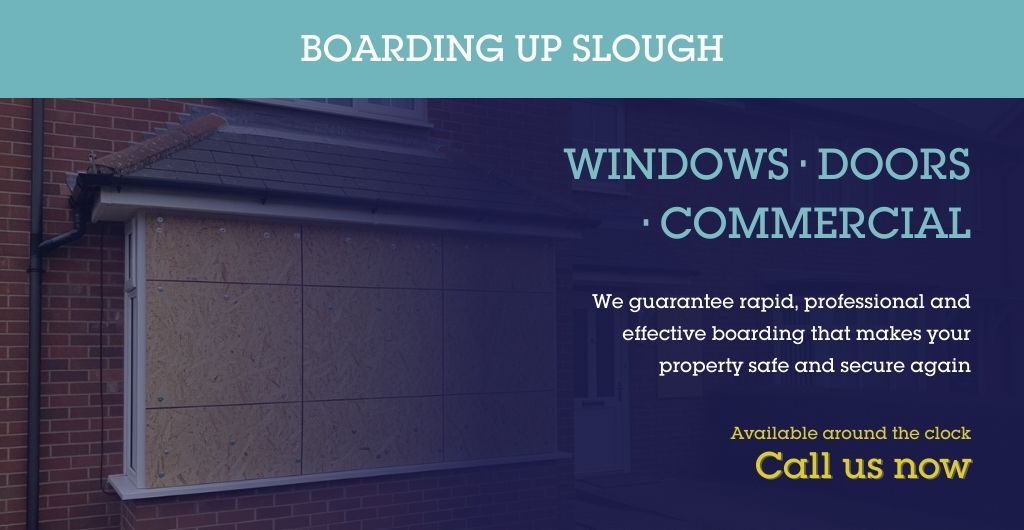
Boarding Up for Residential, Commercial & Vacant Properties in Slough (SL)
If you’re responsible for a property in Slough or the wider SL postcode area and it’s been damaged, left insecure, or needs securing before repairs can begin, the next step is usually the same: make it safe, weatherproof, and difficult to access from outside. We provide boarding up in Slough for residential homes, commercial premises, and vacant/void properties—using the right method for the building type rather than a one-size-fits-all approach.
Some jobs are urgent (a smashed window at night, a forced door, a storm-damaged rooflight). Others are planned (a void property between tenancies, an empty unit awaiting refit). Either way, we’ll talk you through the options, explain what we can do without causing unnecessary damage, and leave you with clear documentation for your records or insurer.
For urgent situations, see our emergency boarding up page.
The main property types we secure (and why it matters)
Boarding up isn’t just “put a sheet of wood over it”. The fixing method, materials, access, and level of security all change depending on the property type—and in Slough’s mix of housing estates, town-centre retail, trading estates and commuter suburbs, we see all of it.
We generally group jobs into three property types:
- Residential: houses, flats, maisonettes, HMOs and small blocks
- Commercial: shops, offices, restaurants, industrial units, schools and managed sites
- Vacant/void: empty homes, probate properties, repossessions, unoccupied commercial units
Choose your property type below to learn what’s typical, what to expect, and what we normally recommend.
- Residential boarding up in Slough
- Commercial boarding up in Slough
- Vacant property boarding up in Slough
How our approach changes by property type
Residential properties (homes, flats, blocks)
Residential work in Slough often involves uPVC windows and doors, older timber frames, and a mix of newer builds near transport links and established streets with 1930s semis and terraces. The priority is usually safety and privacy, and making sure the property is secure without creating extra damage that complicates later repairs.
Common residential scenarios include:
- Broken glazing after a break-in or attempted break-in
- Accidental damage (a ball through a pane, DIY mishap, impact crack)
- Fire brigade entry that’s left a door or window compromised
- A vulnerable ground-floor window when the property will be empty overnight
Typical solutions:
- 18mm exterior-grade plywood for most ground-floor windows/doors where security matters
- OSB can be appropriate for smaller or low-risk openings (we’ll advise honestly)
- Anti-tamper fixings and correct spacing so boards can’t simply be peeled back
- If a door is beyond a safe temporary repair, a temporary steel door can be a better medium-term option than repeatedly boarding a doorway
If you’re dealing with a break-in, our burglary repairs & boarding page explains what to do next and what your insurer may ask for.
Commercial properties (shops, offices, industrial units)
Commercial boarding up in Slough often means larger openings, higher footfall locations, and more emphasis on risk management and repeat targeting. Shopfronts and glazed entrances are frequently the most exposed—especially where there’s evening activity, busier routes, or shuttered units nearby.
Common commercial scenarios include:
- Smashed shopfront glazing (impact, vandalism, attempted theft)
- Forced rear/service doors at units and warehouses
- Damage to high-level glazing, rooflights, or skylights
- Securing a unit while glass replacement or shopfitting is arranged
Typical solutions:
- Heavier-duty boarding for wider spans and shopfronts (with bracing where needed)
- Non-destructive fixing methods where frames allow—important for aluminium shopfront systems
- Temporary steel doors for compromised entrances or repeated attacks
- Steel security screens for longer-term void protection on managed sites (where appropriate)
For retail-facing openings, see shopfront boarding in Slough. For door-related issues, door boarding covers options including temporary steel doors.
Vacant and void properties (unoccupied homes & empty units)
Void properties are a different challenge: the building may be unattended for weeks or months, and the goal is to reduce the opportunity for opportunistic entry, squatting, theft of fittings, or water ingress.
In Slough and the surrounding SL districts, void work is common for:
- Properties between tenancies (landlords and letting agents)
- Probate and estate properties awaiting sale
- Repossessions and long-term unoccupied dwellings
- Empty commercial units pending refit or lease
Typical solutions:
- Robust boarding to accessible openings (especially ground floor)
- Upgraded fixings and, where needed, security screens rather than timber alone
- Considered ventilation (particularly after flood/fire events) to reduce secondary damage
- Regular re-attendance if the risk is ongoing (we can discuss what’s realistic)
If you’re managing an unoccupied site, the dedicated page on vacant property boarding up goes into more detail.
Services we use across all property types
While the property type changes the approach, the core services are consistent. We’ll recommend what fits the opening, the risk, and how long the building needs to remain secure.
- window boarding in Slough for broken or vulnerable glazing
- door boarding in Slough for damaged doors and entrances
- shopfront boarding in Slough for commercial glazing and wider spans
- roof boarding in Slough for rooflights, skylights and overhead openings
- If the issue is boundary access rather than a window/door opening, temporary fencing may be suitable
If you’re unsure which service applies, the explainer on what boarding up is and how it works can help you make sense of the options before you call.
What to expect when you contact us
You don’t need to have all the answers—just tell us what’s happened and what’s currently insecure. We’ll ask a few practical questions so we can arrive prepared.
-
Brief assessment over the phone
We’ll ask what’s damaged (window/door/shopfront/roof), whether the property is occupied, and if there are any immediate hazards. -
On-site survey and method choice
We check the frame condition, access, and whether non-destructive fixing is possible. If the frame is too damaged for a clean fixing method, we’ll explain the options before proceeding. -
Boarding and security
We fit boards with appropriate fixings and spacing, aiming for security, weather resistance, and a tidy finish. -
Documentation for your records/insurer
You can request time-stamped photos, a short work description, and an itemised invoice. We’re not loss adjusters, but we can provide the documentation insurers typically ask for.
If you’re dealing with an insurer, our insurance claims support page outlines what’s helpful to keep (incident numbers, photos, dates, and what was secured).
Slough & the SL postcode area: the kinds of properties we commonly see
Slough is a practical, fast-moving place: strong transport links, a busy town centre, residential estates, and major employment areas. That mix matters because security risks and building types vary street to street.
Across SL1–SL3 (Slough, Cippenham, Langley, Colnbrook, Iver edges), we often attend:
- Residential properties with uPVC glazing and composite doors
- Small parades and independent units with glazed shopfronts
- Industrial and logistics sites where rear access doors are targeted
Across SL4–SL6 (Windsor, Eton, Maidenhead and surrounding villages), we regularly see:
- Period properties and conservation-minded repairs where careful fixing matters
- Higher-value homes where privacy and neatness are a priority
- Mixed-use high streets with larger panes and footfall exposure
We cover the full SL region—see areas we cover for local pages.
FAQs: Choosing the right boarding-up approach by property type
Is boarding up different for a flat compared to a house?
Often, yes. Flats can involve restricted access, shared entrances, and management company rules. We’ll focus on securing the affected opening without obstructing communal areas, and we can provide documentation suitable for landlords, managing agents, or freeholders.
Do you board up commercial units out of hours?
Yes—we handle urgent commercial jobs, but we don’t promise fixed arrival times because conditions vary. If you need urgent help, use the emergency boarding up page and call us with the details so we can prioritise appropriately.
Can you secure a vacant property for weeks or months?
Yes. For longer periods, we’ll discuss whether standard timber boarding is enough or whether a more robust solution (such as security screens or a temporary steel door) makes sense. The right option depends on risk level, location, and how often the site will be checked.
What materials do you use?
Most commonly 18mm exterior-grade plywood for strong, secure boards. OSB can be used for smaller openings or lower-risk situations. We choose fixings based on the frame and risk, using anti-tamper methods where appropriate.
Do you help with storm or fire damage situations?
We secure the property after damage—boarding broken openings, covering vulnerable rooflights, and helping reduce further weather ingress. We don’t carry out restoration (like smoke/odour remediation), but you can read more about what happens next on storm damage boarding and fire damage property security.
Ready to secure your property in the SL area?
Whether it’s a family home, a shop, or an unoccupied unit, we’ll help you choose a sensible, proportionate way to secure it—then provide clear documentation afterwards.
Ready to get started? Call 01753 379 919 or email us for a free, no-obligation quote.
